
How Precious Is Life?
"We are Stardust. We are Golden. We are Billion Year Old Carbon"

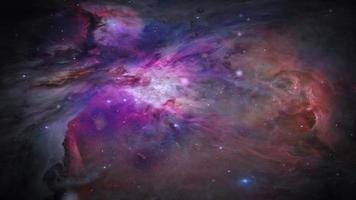
Have you ever wondered how life began? What events occurred that created and have sustained all living entities- humans, animals and vegetation-for millennia? And does life as we understand it on Earth exist anywhere else in the Universe?
These are questions that have been explored by philosophers, religious leaders, scientists and countless curious human beings for thousands of years.
Now it looks like we may have discovered the answer.
A recent article published by the U.S. National Aeronautics and Space Administration- NASA- reported that the James Webb Space Telescope has discovered a rare element that has been determined to be the catalyst for transforming simple organic material into living matter. The scientific name for this seemingly miraculous element is Meythl Cation (cat-a-yon), also known as CH3+.
A Critical Role in the Creation of Life.
Intense Ultra Violet (UV) radiation created by the formation of a star, such as the one at the center of the galaxy that includes the planet Earth likely was the catalyst in the development of CH3+. In turn, CH3+ caused chemical reactions with other available elements - hydrogen, oxygen and carbon - to create more complex carbon molecules that are the building blocks of Earth’s eco-system, including the human species.
Astronomer Olivier Berné of the French National Centre for Scientific Research in Toulouse, led a study that explored this phenomenon. The unique capabilities of the Webb Telescope made it an ideal observatory to search for this crucial molecule.
CH3+ is believed to be a cornerstone of interstellar organic chemistry. Carbon compounds form the foundations of all known life, and, as such, are particularly interesting to scientists working to understand both how life developed on Earth, and how it could potentially develop elsewhere in our universe. Catyon has only been found on Earth and a handful of other celestial bodies, making the creation of humans a rare and complicated process that developed over millions of Earth years.
Albert Einstein was known to believe in this idea. “We are cosmic substance, co- creators, we of all that was and is and what shall be.” (p.147 of Einstein and the Poet - In Search of the Cosmic Man by William Hermanns,1983, Branden)
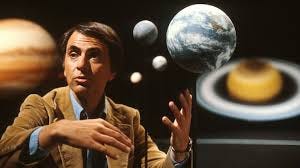
In his landmark PBS series Cosmos: A Personal Journey, Carl Sagan: American astronomer, planetary scientist and science communicator, thought “The cosmos is within us. We are made of star-stuff.”
And singer-songwriter Joni Mitchell acknowledged in her 1969 song Woodstock: “We are star dust, we are golden, we are billion year old carbon.”
Anime
About 60% of English words are of Latin origin. One of those Latin words is ‘anime’. What may come to mind for many people when they think of anime is the very popular style of Japanese animations and graphic novels that are known for dynamic colorful images, characters, and action-packed plots.
Actually, the word comes from Latin and means spirit or soul; the invisible force that literally animates all living entities - people, animals and vegetation. The Romans thought of anime as the life-giving energy that creates and sustains all things biological.
Despite their limited scientific knowledge and technology, the Romans were spot on.
The Scarcity of Humanity in the Universe
Cation is so rare that, among the billions of celestial objects found in the universe by the Webb Telescope, precious few contain CH3+. In fact, there is a high probability that Earth may be the the only place in the universe where humans and other organic entities exist. 8.2 billion people currently live on Earth. But when placed against the vastness of the universe, that’s a veritable tiny drop in an immense bucket.
The Same But Different
Every person on earth is made of the same genetic material: DNA. Yet, at the same time, everyone is unique; for example, no two people have the same fingerprints.
It’s easy to fail to recognize just how special human life is, and how rare each of one of us are. It’s no picnic being a human being, but it is unique. And that means every life is of incalculable value, including yours.
The point is, we all have a place in this ongoing phenomenon of life. Having a tangible connection to every person who has ever lived can only enhance the notion of “community” and the safety and comfort that can provide.
Despite how isolated you might feel, you are never alone.