
Teens Are In Trouble...
And social media just may be the problem.

The United States Surgeon General recently pointed a finger directly at big tech. Studies show how excessive screen time alters critical areas of the brain in young people. With nearly all teens using social media and a third of them saying they are online “constantly”, what could possibly go wrong?
The Surgeon General’s Social Media & Youth Mental Health Advisory
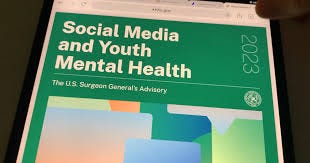
Doctor Vivek Murthy, the Surgeon General of the United States, recently issued an advisory warning that the toll social media has taken on the mental health of young Americans has reached a dangerous and unacceptable level.
According to Dr. Murthy :
“While social media may offer some benefits, there are ample indicators that social media can also pose a risk of harm to the mental health and well-being of children and adolescents.”
How big a risk is there?
According to CDC research on adolescent social media usage, nearly every teenager - 95% of those between the ages of 13 and 17- uses social media in one way or another. And 33% of them - one out of three- report that they use social media almost constantly.
Dr. Murthy sees this is a strong indication of how serious this problem is:
“Children are exposed to harmful content on social media, ranging from violent and sexual content, to bullying and harassment. And for too many children, social media use is compromising their sleep and valuable in-person time with family and friends. We are in the middle of a national youth mental health crisis, and I am concerned that social media is an important driver of that crisis – one that we must urgently address.”
Doctor Murthy acknowledges that social media shouldn’t be completely demonized and that social media use can also promote positive peer connections, which can be highly validating for adolescents. Nonetheless, in a subsequent interview with the New York Times, Dr. Murthy notably pointed out that adolescents “are not just smaller adults. They’re in a different phase of development, and they’re in a critical phase of brain development”
In the advisory report, Dr. Murthy disclosed a major reason for his concern.
“Frequent social media use may be associated with distinct changes in the developing brain in the amygdala (important for emotional learning and behavior) and the prefrontal cortex (important for impulse control, emotional regulation, and moderating social behavior)”
What Impact Does Social Media Use Have On The Brain
In an article written for Health Matters, the NewYork-Presbyterian/Weill Cornell Medicine newsletter, neuropsychologist Dr. Heidi Allison Bender explained how the important areas of the brain are negatively impacted in teens who frequently engage with social media sites.
“There are many different areas impacted among adolescents with habitual social media checking. For example, the amygdala, one of the emotional centers of the brain, was preferentially affected. It’s the part of the brain that makes us fear, that makes us react. The part of the brain responsible for judgement, reasoning and rewards, called the dorsolateral prefrontal cortex, was also impacted”.
It’s important to note that similar functional alterations to the amygdala and pre-frontal cortex- and the resulting behavioral changes- are also significant clinical markers in people who have Borderline Personality Disorder.
If the current situation doesn’t substantially improve, there will undoubtedly be a dramatic increase in the number of today’s teens who will face serious mental health challenges, including emotional dysregulation, as they mature into adulthood.
Things Could Be Worse
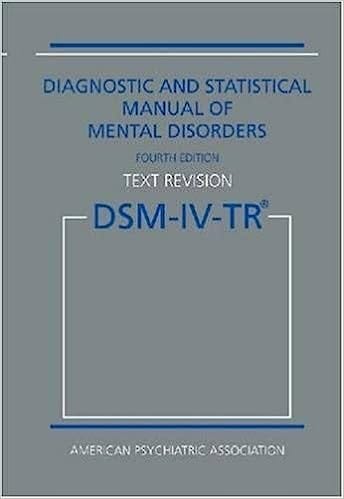
Historically, Borderline Personality Disorder was widely considered untreatable. Providers tended to put the blame on the shortcomings of their patient rather than question the effectiveness of their interventions.
In fact, until a few years ago, mental health providers were not permitted to give adolescent patients an official diagnosis of Borderline Personality Disorder - even if they believed their patients met the criteria for BPD.
Fortunately, In 1994, the American Psychological Association (APA) published a revised version of the 4th edition of their clinical guide, the Diagnostic and Statistical Manual, also known as the DSM-IV-TR. One update to the new version was that it acknowledged that adolescent patients who met the criteria for BPD could be given that diagnosis. Unfortunately, many providers still remain resistant to doing so, even after observing BPD traits in their younger patients.
Almost ten years later, not much had changed.
In 2013, 567 psychologists, including 367 who work with adolescents, completed an online survey regarding Personality Disorders in adolescents. While nearly all participants acknowledged the existence of Personality Disorders, particularly BPD, in adolescents, the survey revealed that only a minority of them gave a BPD diagnosis to their adolescent patients or offered them any BPD targeted treatment.
The reasons providers gave for withholding those services included the unsupported belief that adolescent personality problems resolve over time and that the DSM-IV-TR discouraged diagnosing personality disorders such as BPD in adolescents, which, as noted, was not the case.
Although practice behaviors regarding adolescents with BPD have improved somewhat in the years since that survey, the impact of Covid-19 on the emotional well-being of teenagers significantly outweighs that.
Where Things Now Stand
A 2022 Centers for Disease Control and Prevention publication- the Morbidity and Mortality Weekly Report- indicated that nearly 70% of parents report that parenting is more difficult than it was 20 years ago, citing technology and social media as the top two reasons.
In 2023, a team of researchers from McGill University in Montreal, Canada, published a research paper affirming that attempted suicide rates in adolescents around the world increased during the Covid-19 pandemic.
Current estimates of BPD prevalence among adolescents in the U.S. is now 3%. That is nearly twice the current estimate of 1.6% for BPD prevalence in the general population. If that disparity remains, or worsens, it is very likely that the number of adults with BPD will rise in the coming years.
In the course of 5 years, these and other research studies demonstrated that not only is BPD common among adolescents as young as 11 years old, but that BPD might actually be more prevalent in adolescents than among adults.
In the face of these findings and others, it is clear there is a critical need for effective and accessible interventions for pre-teens and adolescents.
Dr. Marsha Linehan and DBT
It wasn’t until the publication in 1993 of the book, Cognitive Behavioral Treatment of Borderline Personality Disorder, written by Dr. Marsha Linehan, that, for the first time, explained what was causing people with BPD to believe they would be better off dead than living with the crippling emotional pain they were experiencing.
In that groundbreaking book, Dr. Linehan carefully summarized the 20 years of research and clinical practice she had conducted to learn why people would completely give up hope and, importantly, how they could learn to achieve what she calls “ A Life Worth Living”.
In a 2011 interview for the video series If Only We Had Known: A Guide to Borderline Personality Disorder Dr. Linehan describes the goal of her DBT treatment.
As a trained behavioral psychologist, Dr. Linehan’s approach was to carefully examine the behaviors patients were exhibiting when confronted by an emotionally loaded event. The goals of her therapy - which she called Dialectical Behavior Therapy, or DBT - were to help people identify what events or situations that triggered their emotions and then provide them with strategies for managing their deep and often dramatic overreactions to those events.
Here is an example taken from an audio transcript of Dr. Linehan working with a suicidal patient:
Where Do We Go From Here: Undoing the Damage
The Surgeon General’s Advisory Report listed a number of reforms and strategies that could, and should, be put in place by tech companies, platform designers, mental health researchers, providers, schools and families to protect children and adolescents who are significant consumers of online content.
Making changes in those environments might prove helpful in preventing further emotional decline in young people. But there still remains the issue of undoing the damage that has already occurred.
Suicide Rates in Adolescents Increased During COVID-19
In a study published in 2021, the American Academy of Pediatrics declared a state of emergency regarding child and adolescent mental health. The research team concluded:
“This study provides good evidence of an exacerbation in severe mental distress and resultant emergency department presentations over the course of the COVID-19 pandemic among children and adolescents. Our findings are in line with pandemic-related research documenting population-level increases in [pediatric] mental illnesses such as depression and anxiety symptoms and eating disorders, as well as help-seeking [behavior].”
In their April 25, 2022 edition, the Journal of the American Medical Association (JAMA) presented the results of a population study, Evaluation of Suicides Among US Adolescents During the COVID-19 Pandemic. Working from data gathered from 14 U.S. states, the study authors found that:
“The proportion of overall suicides among adolescents increased during the pandemic. No other pandemic-period changes in adolescent outcomes were statistically significant.”
This dire study data on the impact of the Covid pandemic on adolescents’ mental health supports other findings that document a troubling increase in severe mood disorders, including BPD, and related suicidal ideation and attempts.
Fortunately, there are currently available mental health interventions designed to address the rampant hopelessness and despair among that was found in young people 10-14 that have led to the record number of suicidal behaviors in that group.
Adolescent Dialectical Behavior Therapy (DBT-A)
Adolescent Dialectical Behavior Therapy (DBT-A)
In August of 2018, the Journal of the American Medical Association (JAMA) published the results of another randomized clinical trial (RCT) that evaluated the Efficacy of Dialectical Behavior Therapy for Adolescents at High Risk for Suicide.
The multisite trial of 173 adolescents “indicated a significant advantage for dialectical behavior therapy (DBT) compared with individual and group supportive therapy (IGSP) for reducing repeat suicide attempts, non-suicidal self-injury, and total self-harm after treatment.”
In the years since Linehan published her book, the principles of DBT have been adapted and applied to many disorders beyond BPD. For example, DBT has been found to be effective in helping people quit smoking and reduce substance abuse. DBT has also helped people overcome eating disorders, phobias, trauma , depression, anxiety and self-harm.
And it has been adapted for use as an intervention for teens and younger people, helping them - and their families - cope with their emotionally dysregulated lives.
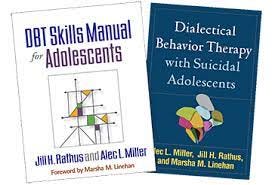
Psychologists Alec L. Miller, PsyD and Jill Rathus, PhD, significantly turned the tide regarding the notion that adolescents were too young to diagnose and treat for Borderline Personality Disorder. They co-authored two books, DBT with Suicidal Adolescents (2007), and DBT Skills Manual for Adolescents (2015,) that described their adaptation of DBT, one they designed specifically to meet the needs of adolescents who have highly dysregulated emotional reactions and have considered suicide or made actual attempts.
Their DBT-based approach includes skill training for both parents & teens separately and together, including a skills module specifically designed to help parents & teens resolve conflicts that arise between them.
Adapted for adolescents, DBT-A is taught in schools, at home and other places where parents are partners in care. DBT-A program components include: family-based skills training, identifying secondary treatment targets, therapist-led family interventions and therapy sessions, parent training sessions with and without their children and off-site phone coaching by the therapist for parents and caregivers.
DBT-A has been disseminated in a variety of environments and locations worldwide, and it has been shown to be highly effective in the treatment of self-harming and suicidal behaviors in adolescents.
In August of 2018, the Journal of the American Medical Association (JAMA) published the results of a randomized clinical trial (RCT) that evaluated the Efficacy of Dialectical Behavior Therapy for Adolescents at High Risk for Suicide.
The multisite trial of 173 adolescents “indicated a significant advantage for dialectical behavior therapy (DBT) compared with individual and group supportive therapy (IGSP) for reducing repeat suicide attempts, non-suicidal self-injury, and total self-harm after treatment.”
A 2023 qualitative trial evaluated the DBT-A program also found it be well regarded and highly effective among adolescents. Themes that arose from the interviews that participants found helpful about DBT-A included: (1) Their need to be seen, listened to and believed in, (2) the importance of teamwork between patient and therapist, (3) the value of group therapy and family structure, (4) therapy as lifesaving and life-changing.
Some Additional Resources
DBT For Dummies
In October of 2022, I interviewed the co-authors of this well written and popular book, Blaise Aguirre, MD and Jillian Galen, PhD, from the Harvard Medical School McLean Hospital in Boston, MA.
DBT For Dummies is an essential guide for emotionally desperate people who are seeking to achieve more hopeful and productive lives. Click below for Part 1. There will be a link in the text portion of the newsletter that will take you to Part 2.
McLean Hospital Online Webinars
A recent webinar presented by McLean Hospital addressed the issue of parents wanting to know how to answer this question: How Can We Support Child and Teen Mental Health?
This one hour video is hosted by Fairlee C. Fabrett, PhD, director of staff development for the Harvard Medical School/ McLean Hospital child and adolescent division. In the video, Dr. Fabrett shared ways for parents to support child and adolescent mental health, offering tips to parents for initiating conversations with young people about well-being, and balancing caring for loved ones while also caring for oneself. The video is free to watch and can be shared with others.
NEABPD: Family Connections
The challenges of dealing with a loved one with BPD can be very stressful, and family members may unknowingly act in ways that negatively impact their relative.
Family Connections, is a 12-week psycho-educational course for parents and caregivers of young people with BPD. Developed by Drs. Perry Hoffman and Alan Fruzzetti, Family Connections groups provide education, skills training, and support for people who are in a relationship with a loved one who has BPD. Family Connections is led by trained group leaders with lived experience and is free of cost. You can learn more about the NEABPD Family Connections through the link above.